Beyond ‘Industry Practice’: Why OEM Standards are the Only Defensible Benchmark for the Duty of Care
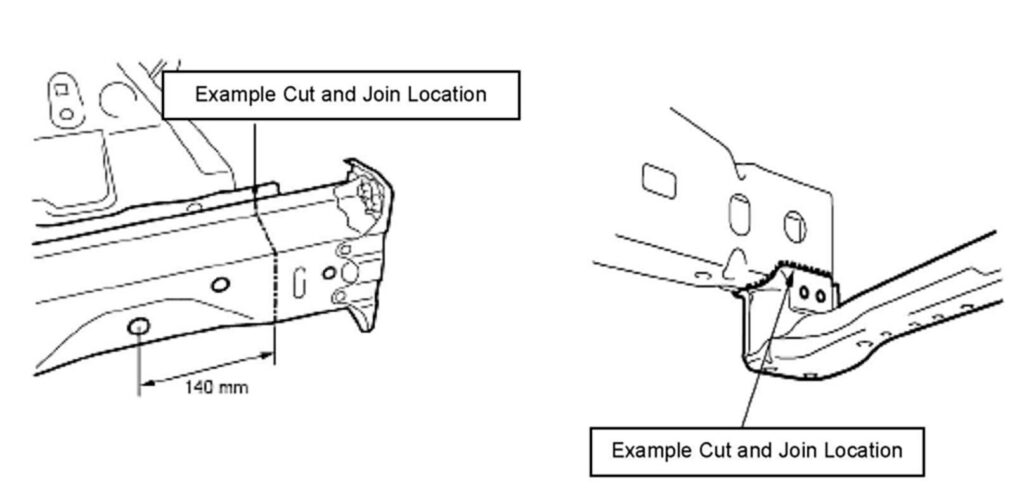
Determining the applicable ‘Standard of Care’ in automotive litigation requires a rigorous distinction between common industry practice and the technical requirements mandated by the Original Equipment Manufacturer (OEM). While “industry practice” is frequently cited as a benchmark for reasonable repair, modern automotive engineering—characterized by specialized alloys and integrated safety systems—increasingly renders traditional methodologies insufficient under Australian law.
For legal professionals managing recovery or negligence claims, the reliance on a report that merely validates “standard industry procedures” poses a significant evidentiary risk. To be defensible, an expert opinion must demonstrate that the repair methodology aligns with the specific engineering blueprints of the vehicle in question.
Here is why OEM Repair Standards serve as the only objective benchmark for establishing the Standard of Care in contemporary automotive litigation.
The Limitations of ‘Peer Professional Opinion’ (Section 5O)
Under Section 5O of the Civil Liability Act 2002 (NSW), a professional is generally not liable in negligence if they acted in a manner widely accepted by peer professional opinion as competent practice.
However, in the context of automotive forensics, the “peer” standard is increasingly superseded by manufacturer-specific mandates. With the introduction of ultra-high-strength steels and Advanced Driver Assistance Systems (ADAS), “widely accepted” practices often conflict with documented engineering requirements. If a repairer deviates from an OEM-mandated “one-time-use” fastener or a specific adhesive bonding pattern, they are arguably departing from the only authoritative standard of safety. In a courtroom setting, a report citing a specific OEM Technical Service Bulletin carries significantly more evidentiary weight than one relying on generalized industry tradition.
Satisfying the ‘Makita’ Test: Objective Fact vs. Subjective Assertion
Australian courts, guided by the requirements set out in Makita (Australia) Pty Ltd v Sprowles [2001], require that an expert’s opinion be based on “identified and admissibly proved” facts.
A report justifying a repair based on “industry practice” often rests on subjective assertion. Conversely, a report anchored in OEM Standards is grounded in verifiable data. At Backstaff, our forensic analysis provides the Court with a direct comparison between the work performed and the manufacturer’s engineering specifications. This provides the “demonstrable route” from fact to conclusion that is essential for the admissibility of expert evidence.
Technical Negligence: The Risk of ‘Near Enough’ Methodologies
Modern vehicle architecture is composed of materials that respond poorly to traditional repair techniques:
- Thermal Compromise: The application of heat to High-Strength Steel (HSS) can alter its molecular structure, rendering a structural safety component brittle.
- Sensor Misalignment: A deviation of as little as 1 degree in an ADAS radar mount—frequently overlooked in standard industry inspections—can result in the failure of autonomous emergency braking systems.
Where a repairer bypasses OEM-mandated calibration to follow “standard industry practice,” their position regarding Professional Negligence becomes technically and legally difficult to defend.
Regulatory and Tribunal Precedents (The ACL Standard)
Recent decisions by the Australian Financial Complaints Authority (AFCA) underscore that “industry standard” is not a substitute for Acceptable Quality under Section 54 of the Australian Consumer Law.
In multiple instances, insurers have been required to fund the total rectification of repairs that, while visually acceptable to “industry standards,” failed to restore the vehicle’s structural and functional integrity as defined by the OEM. For a solicitor, a forensic report that identifies these technical breaches is the primary tool for quantifying loss and proving statutory non-compliance.
The Backstaff Approach: Evidence-Based Forensics
At Backstaff, we specialize in the intersection of automotive engineering and the Australian legal system. We avoid generalized assessments in favor of Component-Level Precision, benchmarking every repair against the only objective standard available: The OEM Technical Manual.
By utilizing manufacturer-level data, we provide solicitors with:
- Admissible Evidence: Reports designed to withstand the rigors of cross-examination.
- Defensible Quantum: Repair costs substantiated by engineering requirements rather than insurer algorithms.
- Mitigated Risk: Ensuring that vehicle safety and legal positioning are based on irrefutable technical data.
Are you managing a claim involving disputed repair quality or technical negligence?
Ensure your expert evidence is built on the forensic foundation of OEM Standards.