The Total Loss Trap: Stop Wasting Elite Talent on Cars That Will Never Hit the Bay
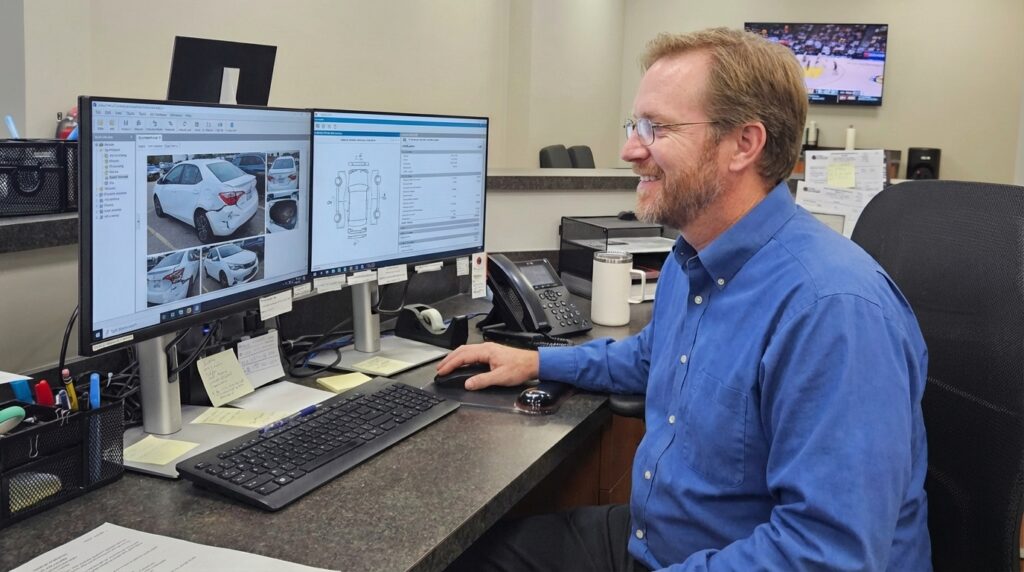
Every collision shop owner knows the sinking feeling of the “Ghost File.” It’s the estimate your top-tier writer spent three hours meticulously documenting—researching OEM procedures, identifying structural damage, and line-iteming every clip—only for the insurance carrier to deem the vehicle a Total Loss.
The result? You’ve just paid a high-salary on-site estimator to produce exactly zero dollars in labor revenue.
In an era where roughly 15% of claims are now resulting in total losses, this isn’t just a minor annoyance—it’s a massive drain on your bottom line. Here is why it’s time to move your total loss documentation to a remote, specialised workforce.
1. The Math of a “Dead File”
Your on-site estimators are likely your most expensive administrative employees. When you factor in salary, payroll taxes, benefits, and “opportunity cost,” an experienced writer costs your shop a significant amount per hour.
When that writer spends their day processing total losses, you are essentially paying “A-Tech” wages for data entry. By outsourcing these files to a remote Backstaff specialist, you shift that work to a lower, fixed-cost model. You save the high-value hours of your on-site team for the cars that actually fill your bays.
2. Keep Your “A-Players” Focused on Revenue
Your on-site team’s greatest value is their physical presence. They should be “Blueprinting” at the car, consulting with technicians, and finding the hidden supplements that drive up your average Repair Order (RO).
When a remote writer handles the total loss documentation—gathering photos, inputting data into your quoting system, and preparing the valuation package—your on-site team is freed up to focus 100% on revenue-generating repairs.
3. Speed Up the “Bay Clear”
Total losses often clog up your yard or your teardown bays because they are waiting on paperwork. Remote writers operate without the distractions of a ringing phone or a walk-in customer. They can finalize total loss documentation with “laser-focus,” allowing you to get the car off your property and out of your workflow faster.
4. Eliminate “Estimator Burnout”
Let’s be honest: Estimators hate writing total losses. It’s a demoralizing task that provides no professional satisfaction. By removing the “administrative fluff” of dead files from their plate, you improve morale and retention. You’re letting them do what they do best—manage complex repairs and help the shop grow.
The Bottom Line: Desks vs. Bays
In 2026, the most successful shops are those that treat their on-site staff as Production Managers, not file clerks.
Don’t let “Ghost Files” haunt your P&L. By leveraging Backstaff’s remote writers to handle your total loss documentation, you stop the overhead leak and ensure that every hour paid to your on-site team is an hour spent making the shop money.