Component-Level Precision: Meeting the ‘Makita’ Standard in Automotive Litigation
In the Australian legal landscape, the value of an expert report is not judged by the reputation of the author, but by the transparency of the reasoning and the granularity of the data provided.
For solicitors managing motor vehicle property damage or consumer law claims, the challenge often lies in moving an “opinion” beyond the reach of the opinion rule (Section 76 of the Evidence Act 1995). To be admissible and carry weight, a report must satisfy the exception under Section 79, proving it is based on “specialised knowledge.”
At Backstaff, we achieve this through Component-Level Precision. Here is why this granular approach is vital for ensuring unambiguous case clarity and procedural compliance.
Satisfying the ‘Basis Rule’ and Makita v Sprowles
The landmark decision in Makita (Australia) Pty Ltd v Sprowles [2001] established that for an expert’s opinion to be useful, the report must clearly identify the facts or assumptions on which the opinion is based.
A report that simply states a vehicle is “unsafe” is an assertion, not an expert opinion. Component-Level Precision allows us to satisfy the Court by documenting the exact deviation from Australian Design Rules (ADRs) or manufacturer-standard tolerances. By identifying failure at the component level, we provide the “demonstrable route” from fact to conclusion that the NSW Supreme Court and other Australian jurisdictions demand.
Identifying Breaches of Statutory Standards (ADRs)
In many Australian cases, the “standard of care” in vehicle repairs is defined by the Australian Design Rules (ADRs) and the Vehicle Standards Regulations.
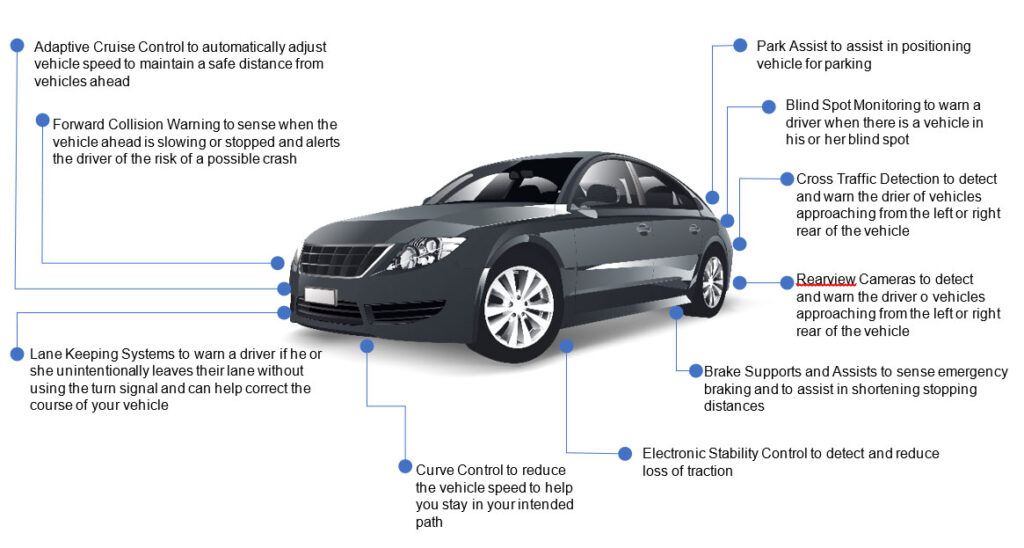
Generalised inspections often miss “hidden” breaches—such as compromised crumple zones or improperly recalibrated Advanced Driver Assistance Systems (ADAS). Our forensic approach involves a component-by-component analysis to ensure that every structural bond and safety sensor meets the Manufacturer’s Specifications. This provides solicitors with irrefutable evidence of technical negligence or statutory breach.
Substantiating Quantum in the Schedule of Damages
A primary objective for any solicitor in recovery proceedings is to substantiate the Quantum of Loss.
Ambiguous reports lead to “global” estimates that are easily challenged by insurer-appointed experts. Component-Level Precision provides a forensic itemisation of the damage. When we quantify the failure of specific sub-assemblies or electronic modules, we provide a defensible foundation for the Schedule of Damages. This granularity makes it significantly harder for the opposing side to argue for a “depreciated” or “abbreviated” repair cost.
Excellence in the Expert Conclave (Joint Reports)
Under UCPR Schedule 7 (the Expert Witness Code of Conduct), the paramount duty is to the Court, not the person paying the fee. This duty is most rigorously tested during the Joint Conference (Conclave).
When Backstaff experts enter a conclave, they do so backed by high-resolution data and component-level diagnostics. When the opposing expert relies on “industry experience” while we rely on “calibrated measurement deviations,” our technical narrative remains the most credible. This often results in a Joint Expert Report that strongly favours our client’s technical position because the evidence is too granular to be dismissed.
The Backstaff Advantage: Modern Forensic Rigour
The Australian legal system is moving away from the “hired gun” expert towards highly technical, impartial specialists.
Whether appearing before NCAT, VCAT, or the Magistrates’ Court, Backstaff’s commitment to component-level precision ensures your evidence is admissible, defensible, and trial-ready. We bridge the gap between complex automotive engineering and the rigorous demands of Australian law.
Does your current expert report stand up to the Makita test?
Don’t risk your client’s case on a superficial assessment. Ensure your evidence is backed by forensic precision.