The Benchmark of Restoration: Substantiating OEM Standards in High-Value Automotive Litigation
In Australian automotive litigation, the distance between an insurer’s “desktop assessment” and a manufacturer-standard repair is often significant. For luxury and high-performance vehicles, this “Quantum Gap” is not merely a matter of price—it is a matter of engineering compliance.
When a dispute arises between a repairer’s quote and an insurer’s abbreviated estimate, the resolution depends on whether the repair methodology satisfies the legal requirement of restitutio in integrum. To bridge this gap, solicitors must rely on an Expert Witness Report to prove that anything less than Original Equipment Manufacturer (OEM) procedures constitutes a failure to restore the asset.
Complex Safety Systems and Electronic Integrity
Modern luxury vehicles are defined by their Advanced Driver Assistance Systems (ADAS). These systems—including autonomous emergency braking, lane-keep assist, and adaptive cruise control—rely on a network of radar, ultrasonic, and camera sensors.
Insurer estimates frequently underestimate the labour and specialized environment required for ADAS recalibration. A deviation of just one degree in a sensor mount can render safety systems non-functional or, worse, dangerously unpredictable. An Expert Witness Report identifies these invisible electronic requirements, proving to the Court that calibration is a non-negotiable safety mandate, not an optional “add-on.”
Structural Precision: Bolt-On vs. Weld-On Procedures
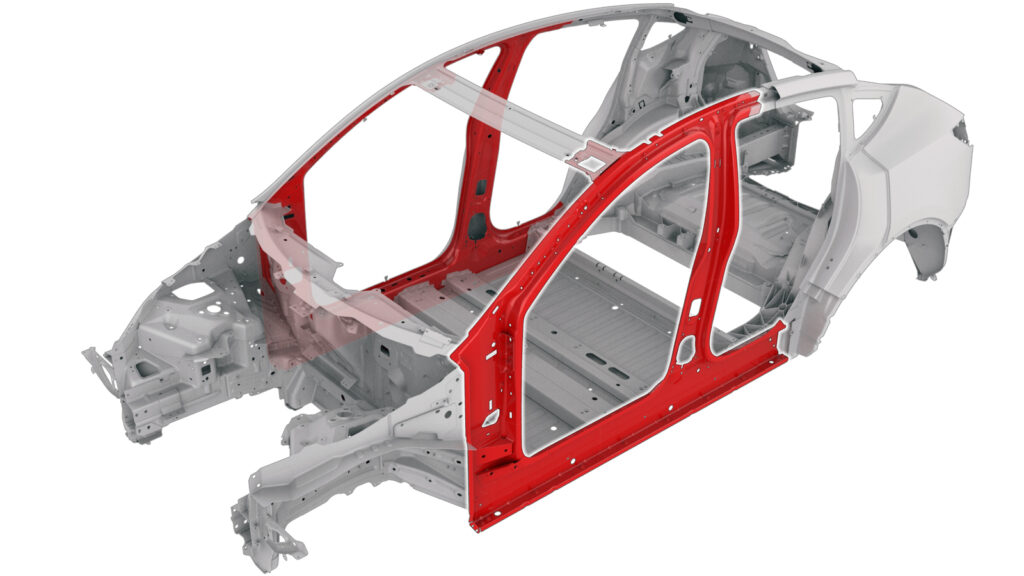
The structural integrity of a luxury vehicle is governed by the materials used in its construction, such as ultra-high-strength boron steel and aluminum alloys. The repair methodology for these components is strictly dictated by the OEM:
- Bolt-On Panels: While seemingly straightforward, these components often serve as mounting points for safety sensors. OEM procedures dictate specific torque settings and alignment tolerances that, if ignored, can compromise the vehicle’s aerodynamic profile and sensor accuracy.
- Weld-On Components: This is a critical area of insurer cost-cutting. Manufacturers often forbid traditional “plug welding” on certain structural pillars, mandating specific “squeeze-type resistance spot welding” or structural bonding (rivet-bonding).
Failure to follow these specific structural procedures can alter the vehicle’s “crash pulse,” potentially causing airbag systems to deploy incorrectly in a subsequent impact. A forensic Expert Witness Report provides the Court with the manufacturer’s own technical bulletins to prove why alternative “industry standard” welding is insufficient and legally indefensible.
Paint Restoration and Prestige Finishes
For luxury vehicles, paint is more than an aesthetic choice; it is a complex chemical application involving multi-stage pearls, tinted clears, or matte finishes.
Standard insurance estimating software often utilizes “average” paint times that fail to account for the meticulous preparation, multi-coat layering, and infrared curing required by prestige marques. To restore the vehicle to a state of Acceptable Quality under Section 54 of the Australian Consumer Law, the finish must be indistinguishable from the original. An expert report substantiates the “True Cost” of refinishing, ensuring the owner is not left with a “stigmatized” asset due to poor colour matching or substandard texture.
The Evidentiary Weight of an Expert Witness Report
In a legal or tribunal setting (such as NCAT or VCAT), a solicitor cannot rely on a repairer’s quote alone, as it may be viewed as an interested party’s opinion. The Expert Witness Report provides the necessary independent authority by:
- Satisfying the Makita Standard: It provides the “demonstrable route” from the technical manufacturer data to the dollar figure in the claim, ensuring the evidence is admissible and carries weight.
- Benchmarking the Standard of Care: It establishes that the OEM manual—not the insurer’s algorithm—is the only objective benchmark for a “reasonable” repair.
- Assisting the Court’s Understanding: It translates complex metallurgical and electronic data into a clear narrative, helping the Magistrate or Member understand why a “cheaper” repair would result in a breach of statutory guarantees.
Summary
For high-value assets, “near enough” is not a legal restoration. Whether dealing with complex ADAS recalibration or the structural nuances of weld-on panels, the manufacturer’s blueprint is the only defensible standard.
By utilizing a forensic Expert Witness Report, solicitors can ensure that their client’s claim is built on an irrefutable technical foundation, protecting both the safety of the vehicle and its long-term market value.
Are you managing a high-value automotive claim with a disputed repair quantum?
Ensure your evidence meets the forensic standards required by Australian Courts. Substantiate the necessity of OEM procedures with an independent expert analysis.
Consult with a Backstaff Expert Witness today