Safety Over Savings: Why the ‘Safe and Proper’ Standard Trumps Insurer Guidelines in Structural Repair Disputes
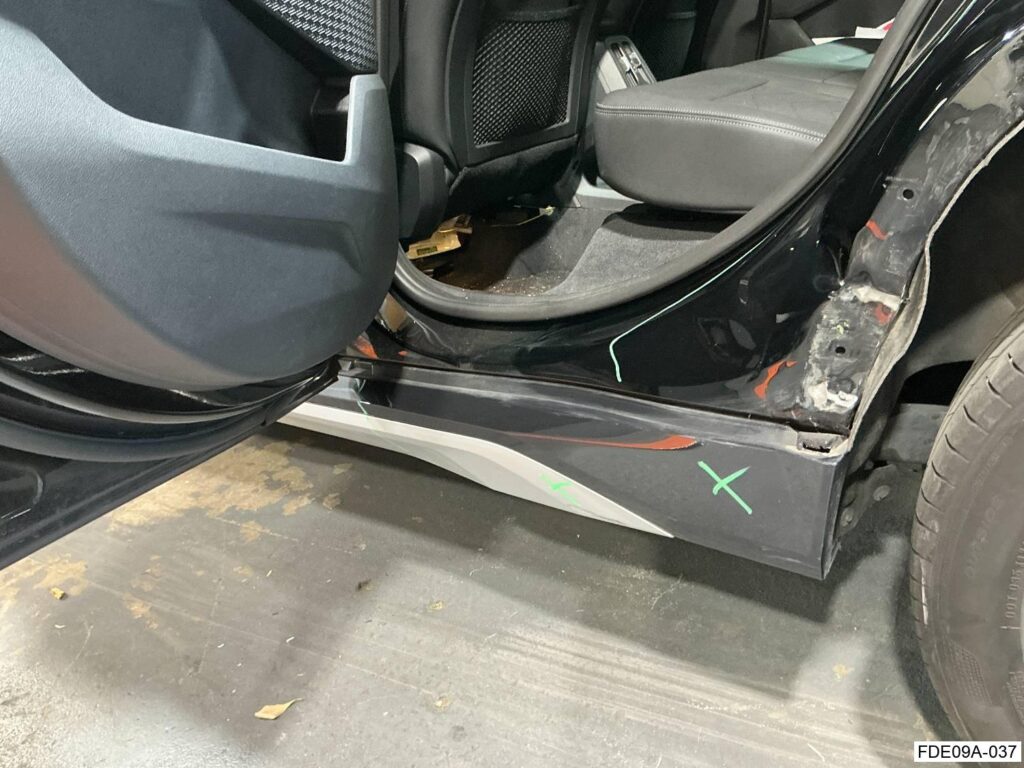
When a motor vehicle dispute reaches an Australian court or tribunal, the ‘reasonableness’ of repair costs is often contested through the lens of insurer guidelines. However, these internal policies frequently clash with the uncompromising requirements of OEM (Original Equipment Manufacturer) workshop manuals. For a solicitor to successfully maximise Quantum, the expert evidence must demonstrate why the manufacturer’s methodology is the only legally defensible path to reinstatement.
For solicitors acting in property damage or personal injury claims, this isn’t merely a technical disagreement. It is a question of liability and the objective calculation of Quantum. When an insurer insists on a “patch and pull” repair for a structural component, and the manufacturer mandates a full replacement, the expert witness report becomes the pivot point for the entire claim.
The Physics of High-Strength Steel (HSS)
Modern vehicle architecture has moved far beyond mild steel. To achieve high ANCAP safety ratings, manufacturers now use Ultra-High-Strength Steels (UHSS) and Boron in A-pillars, B-pillars, and sills.
These materials are designed to manage crash energy by remaining rigid. However, their molecular integrity is compromised the moment they are deformed. Unlike older vehicles, these components cannot be “straightened” using heat or traditional hydraulic pulling without becoming brittle or prone to cracking.
An insurer’s guideline might suggest a 10-hour structural repair to save costs. However, the OEM (Original Equipment Manufacturer) Workshop Manual may explicitly state: “Structural components of this grade must not be repaired; they must be replaced at factory join-sites.”
The MVIRI Code of Conduct: A Legal Anchor
In Australia, the Motor Vehicle Insurance and Repair Industry (MVIRI) Code of Conduct serves as a vital touchstone. Under the Code, insurers and repairers are obligated to ensure that repairs are “safe and proper.”
When an expert assessor provides evidence, they are not simply offering a “more expensive opinion.” They are identifying a breach of the “safe and proper” standard. By citing the MVIRI Code alongside specific OEM technical bulletins, the expert witness moves the dispute from a subjective argument about price to an objective argument about legality and roadworthiness.
How Objectivity Maximises Quantum
To successfully maximise Quantum in a dispute, an expert report must demonstrate that the higher cost is the only reasonable cost. Here is how a forensic assessment achieves this:
- Eliminating “Opinion” with Manuals: By embedding screenshots of the manufacturer’s specific repair instructions for that VIN, the assessor removes any room for insurer rebuttal. If the manual says “Replace Only,” any estimate for “Repair” is objectively flawed.
- Identifying Liability Risks: The report should highlight that a sub-standard repair creates a “latent defect.” Should the vehicle be involved in a subsequent accident where the structural pillar fails to perform, the liability could shift to the parties who authorised the non-standard repair.
- The “Reinstatement” Principle: Under Australian law, the claimant is entitled to be placed back in the position they were in prior to the loss. A car with a “repaired” structural pillar is not the equivalent of a car with its factory structural integrity intact. The Quantum must therefore reflect the cost of a full OEM-standard replacement to achieve true reinstatement.
A Quick Case Study
Why the Dog Leg is a “Battleground” for Disputes
1. Material Science (High-Strength Steel)
Most modern vehicles use Ultra-High-Strength Steel (UHSS) or Boron steel in the dog leg area to protect occupants during a side-impact collision.
- Insurer Position: Often suggests “pulling” the dent or using a power-stud to straighten the metal (typically a 5–8 hour labor charge).
- Expert/OEM Position: Manufacturers (like Toyota, BMW, or Ford) often have “Position Statements” forbidding the application of heat or heavy pulling on UHSS. Deforming and then “cold-working” this metal back into shape can make it brittle, meaning it won’t perform correctly in the next accident. An expert report uses this data to justify a full panel replacement or approved sectioning, which can cost 4,000-7,000+ compared to a $1,000 repair.
2. The “Sectioning” vs. “Full Replacement” Debate
Because the dog leg is part of the massive rear quarter panel (which often runs all the way up to the roof), replacing the whole thing is a huge job,
The Dispute: Insurers push for a “partial repair” (sectioning) to avoid the cost of removing the glass, interior trim, and roof linings.
The Objective Evidence: An experienced assessor will pull the specific OEM Workshop Manual for that VIN.If the manufacturer does not provide a specific “cut point” (sectioning procedure) for that dog leg, then legally and technically, the only safe repair is a full quarter panel replacement.
3. Australian Regulatory Compliance (MVIRI & VSI 25)
In Australia, these disputes are governed by:
MVIRI Code of Conduct: Mandates that repairs must be “safe and proper.”
VSI 25 (Victoria) or similar state guidelines: These require that structural repairs must restore the vehicle to its “pre-crash level of safety” and comply with Australian Design Rules (ADRs).
How This Maximises Quantum
By focusing on the dog leg, a solicitor/assessor can increase the claim value (Quantum) by proving that a “cheap” repair is actually an unlawful/unsafe repair.
| Method | Estimated Cost (Example) | Objective Justification |
| Insurer “Pull & Fill” | $850 – $1,200 | Based on “industry average” times; ignores metallurgy. |
| Expert OEM Methodology | $5,500 – $9,000 | Mandatory replacement of UHSS, glass removal, ADAS recalibration, and full-panel refinishing. |
The Expert Witness as a Risk Manager
For Australian law practices, the value of an experienced automotive damage assessor lies in their ability to provide a Schedule 7-compliant report that survives cross-examination.
When an assessor uses 3D digital measuring systems and metallurgical data to prove that an insurer’s “standard” repair is a safety risk, the insurer’s position often becomes untenable. The result is a settlement that reflects the true cost of safety—maximising the Quantum for the client while shielding the legal practice from the risks associated with settling for an unsafe repair.
Conclusion
In the tension between insurer “internal logic” and manufacturer “engineering fact,” the latter must always prevail in an Australian court. By focusing on structural integrity and the “Safe and Proper” standard, solicitors can ensure that Quantum is not just a number, but a defensible reflection of automotive safety and the law.

I-CAR ADAS-certified expert with 35+ years of experience spanning collision centre management (Callaghan Collision) and senior insurance assessing (Allianz, AAMC), specialising in objective, forensic reporting for Australian legal disputes.